
Last Updated: October 29, 2026
Quick Summary
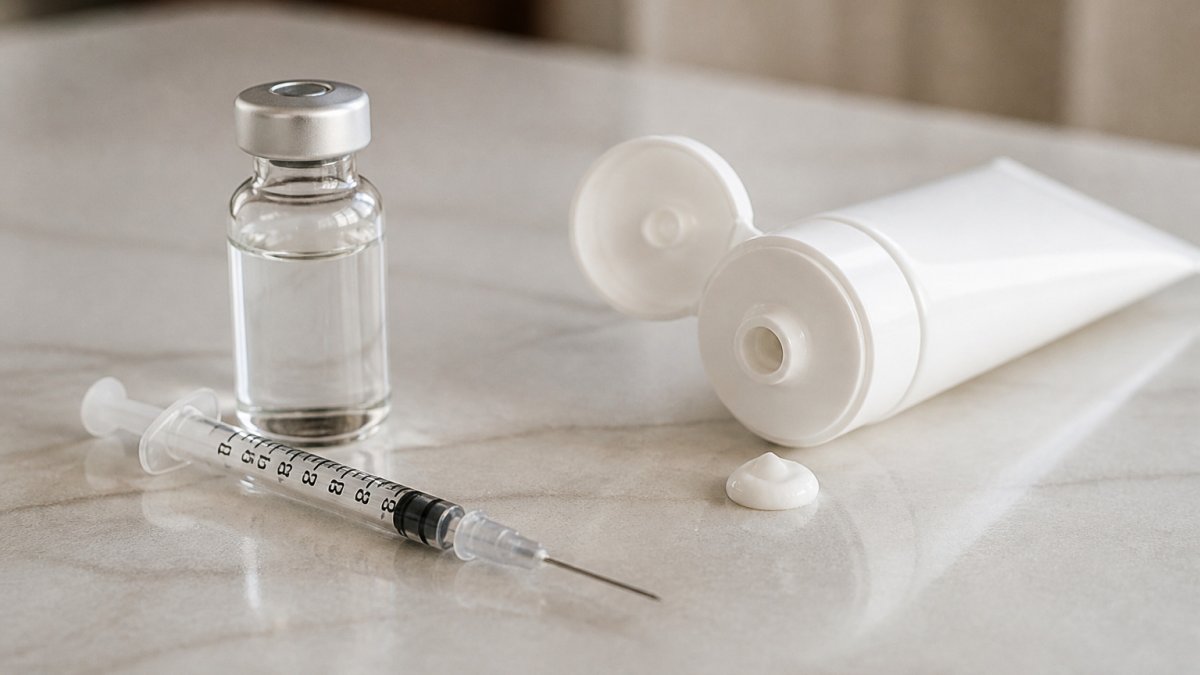
Testosterone injections vs gels differ mainly in timing: injections release a large dose that fades over days, while gels are applied daily for steadier levels. Neither is universally better, so the right choice depends on your routine, needle comfort, and transfer risk at home.
- Injections are typically given every one to two weeks, depending on product and prescriber plan.
- Gels are applied once daily to clean, dry skin on the shoulders, upper arms, or abdomen.
- Gels carry transfer risk to partners and children, so cover the application site after it dries.
- Blood tests within a few months of starting check testosterone levels and red blood cell count.
- Do not change your dose or timing without reviewing labs and symptoms with your clinician.
Table of Contents
- How Testosterone Injections and Gels Work
- Testosterone Injections vs Gels: Side-by-Side Comparison
- How Often Testosterone Injections Are Given
- How Often Testosterone Gel Is Applied and How Steady Levels Stay
- Testosterone Injections vs Gel Side Effects
- Testosterone Gel Application and Transfer Risk
- Testosterone Therapy Monitoring: Blood Tests and Follow-Up
- Choosing Between Injections and Gel With Your Clinician
- Frequently Asked Questions
Men comparing testosterone injections vs gels usually want one answer: which method is less hassle, works more steadily, and fits their life. This guide lays out the practical differences so you can ask better questions. Both methods raise testosterone, but they do it in very different ways, and the right choice depends on how you live, how you feel about needles, and how your body responds.
The core difference is timing. Injections release a large dose at once, which then fades over days. Gels are applied daily to the skin, which produces a steadier daily level. The better question is which pattern suits your routine and symptoms. A MedlinePlus overview of testosterone therapy explains that testosterone replacement is generally prescribed only after blood tests confirm low levels, so your starting point matters as much as the delivery method.
How Testosterone Injections and Gels Work
Testosterone injections deliver the hormone into muscle, usually in the thigh or buttock. The drug enters the bloodstream over time, creating a peak after each dose and a gradual decline before the next. Gels are rubbed onto clean, dry skin, usually the shoulders, upper arms, or abdomen, and absorb through the skin into the blood.
Gels are typically applied once a day, while injection schedules vary by product and prescriber. Each route changes how levels rise and fall, which affects how you feel between doses.
Testosterone Injections vs Gels: Side-by-Side Comparison
| Factor | Injections | Gels |
|---|---|---|
| Application frequency | Every 1-2 weeks (typical) | Once daily |
| Level pattern | Peaks after dose, then declines | Steadier day-to-day |
| Convenience | Clinic or at-home injection | Daily routine, no needles |
| Transfer risk | None | Yes, to partners and children |
| Upfront cost | Often lower per month | Often higher per month |
| Best for | Men who dislike daily tasks | Men who want steady levels |
Injections, pros: Fewer applications and a predictable schedule. Injections, cons: Needles, peaks and troughs in energy or mood, and some men feel effects fade before the next dose.
Gels, pros: No needles, steadier levels, and easy dose adjustments. Gels, cons: Daily discipline is required, skin irritation can occur, and skin-to-skin transfer is a real safety concern covered later.
How Often Testosterone Injections Are Given
Most injection protocols call for dosing every one to two weeks, depending on the prescribed product and your clinician’s plan. Some men do better with smaller, more frequent doses to reduce the peak-and-trough effect.
Your schedule should be set by your provider based on your labs and symptoms. Do not change dose timing on your own, because shifting intervals can change how you feel and how your blood levels read on follow-up tests.
How Often Testosterone Gel Is Applied and How Steady Levels Stay
Gels are applied once daily, usually at the same time each day. Consistency is the main reason gels produce steadier levels. Skipped doses or inconsistent timing can create the same swings that injections cause.
Apply the gel to clean, dry skin, let it dry fully before dressing, and wash your hands afterward. Set a reminder if daily routines are hard to keep.
Testosterone Injections vs Gel Side Effects
Both delivery methods share the same systemic risks because they raise testosterone the same way once the hormone is in the bloodstream. The differences are mostly local, at the injection site or on the skin, plus a few practical timing issues that affect how side effects show up and how quickly they can be caught.
Shared systemic effects. Testosterone therapy can increase red blood cell production (which can raise hematocrit and blood viscosity), cause acne and oily skin, trigger breast tenderness or gynecomastia, and lead to fluid retention and swelling. It can also suppress natural testosterone production and sperm production, which matters if fertility is a goal. Sleep apnea can worsen, and mood changes, irritability or aggression, are reported by some men. A FDA safety communication on testosterone products outlines cardiovascular and other risks your clinician should review before starting therapy, and a MedlinePlus overview of testosterone therapy summarizes the broader risk profile.
Injection-specific issues. Because injections deliver a large dose at once, side effects can track the peak-and-trough curve. Some men notice more acne, fluid retention, or mood swings in the days after a dose and a fade in energy or libido before the next one. Local reactions include pain, bruising, redness, or swelling at the injection site, and repeated injections in the same spot can cause lipohypertrophy or scar tissue. Rare but serious risks include infection at the injection site and, with some formulations, oil-based reactions. Proper technique and rotating sites reduce these.
Gel-specific issues. Gels can cause application-site irritation, redness, itching, dryness, or peeling, especially in men with sensitive skin or eczema. Because gels are applied daily, irritation can be persistent rather than episodic. The bigger gel-specific risk is transfer to others, covered in the next section. Some men also report that gels feel less potent or that levels are harder to fine-tune if absorption varies by skin type or application site.
Monitoring is the real differentiator. Most practitioners check hematocrit, prostate-specific antigen (PSA), and testosterone levels at baseline and again within a few months of starting, then less often once stable. Hematocrit above the reference range is a common reason to adjust dose or switch methods. Because injections produce peaks and troughs, blood draws should be timed to the dosing schedule, a level drawn at the wrong point can look falsely high or low. Gels are usually checked in the morning before application for a consistent reading. Keeping a symptom log of energy, mood, sleep, and any local reactions helps your clinician connect lab results to how you actually feel, rather than treating a single number as the whole picture.
Do not start, stop, or change the dose of testosterone therapy on your own. Dose changes should be based on labs and symptoms reviewed with your clinician, because shifting timing or amount can change both how you feel and how your blood levels read on follow-up tests.
::: Consistent monitoring requires choosing between various lab testing options to ensure that your clinical oversight aligns with the practical demands of your daily schedule.
Testosterone Gel Application and Transfer Risk
Transfer risk is the single most under-discussed safety issue with gels, and it is the area where a focused comparison can add the most practical value. Testosterone gel leaves hormone on the skin after application. Until it is fully absorbed and the site is covered, skin-to-skin contact can move testosterone to partners, children, or pets, and that exposure can cause unwanted effects, especially in women and children (such as acne, mood changes, or early puberty signs in children).

Apply correctly. Apply the gel to clean, dry skin on the shoulders, upper arms, or abdomen as directed by the product label, not to the genitals, and generally not to skin that will be covered tightly or that has cuts or irritation. Let the gel dry completely before dressing. Drying time varies by product; follow the label rather than guessing.
Wash hands immediately. Handwashing right after application is the simplest and most effective step. Use soap and water, and wash again before handling food or touching anyone else.
Cover the site. After the gel dries, cover the application area with clothing, a shirt that covers the shoulders and upper arms, for example. Avoid skin-to-skin contact with the application site for several hours after application, and longer if the label specifies. Do not let children or pets touch or lick the area.
Manage clothing and bedding. Wash clothing or bedding that contacts the application site, and avoid sharing towels. If a partner is pregnant or trying to conceive, discuss precautions with your clinician before using gels at all, because transfer risk and fertility effects both matter in that situation.
Household-specific guidance. Men with young children at home should be especially careful about morning routines, apply after showering, dress fully, and wash hands before childcare. Men whose partners have skin conditions or are sensitive to hormone exposure should also weigh transfer risk heavily. If strict daily precautions are unrealistic for your household, injections may be the safer practical choice, which is one reason the decision framework matters more than a generic pros-and-cons list.
Set a phone reminder for the same time each day, apply right after a shower, and keep a dedicated towel and shirt routine so the gel dries and gets covered before anyone else is nearby. Consistency reduces both missed doses and transfer risk.
Testosterone Therapy Monitoring: Blood Tests and Follow-Up
Regardless of method, you need periodic blood tests to check testosterone levels, red blood cell count, and other markers. Early follow-up typically happens within a few months of starting, then less often once your dose is stable.
Monitoring tells your clinician whether the dose is right and whether side effects need attention. Keep a log of symptoms, energy, mood, and sleep so your provider can connect lab results with how you feel.
Choosing Between Injections and Gel With Your Clinician
The right method depends on your daily routine, comfort with needles, and tolerance for daily application. Men who travel often or who dislike needles may lean toward gels. Men who want fewer applications and do not mind injections may prefer that route. Cost, insurance coverage, and transfer risk at home also belong in the decision.
Bring specific questions to your appointment: how each option fits my schedule, what side effects should I watch for, and how often will we check labs? Your clinician can review your blood work and goals to recommend the approach that makes most sense for you.
Frequently Asked Questions
What are the main differences between testosterone injections and gels?
Injections are given into muscle, usually every one to two weeks, and produce higher peaks and lower troughs in blood testosterone levels. Gels are applied to the skin once daily and tend to produce steadier levels across the day. Gels require daily discipline and carry a risk of transfer to others through skin contact, while injections require a clinician or trained self-injection and a minor procedure each time. Cost varies with insurance, prescription, and pharmacy, so confirm current pricing with your pharmacy or provider. Your clinician can help determine which format fits your lifestyle and lab results.
How often do men need testosterone injections?
Many men receive testosterone injections every one to two weeks, though some clinicians prescribe weekly or every-other-week dosing depending on the ester used, the dose, and individual blood test results. Longer-acting formulations may be given less often. Scheduling is usually adjusted after follow-up blood work to keep levels within the target range. Never change your injection interval on your own, since timing affects how steady your levels stay between doses. Your prescriber will set the schedule and explain what to do if a dose is missed.
Can testosterone gel transfer to a partner or child?
Yes. Testosterone gel can transfer through skin-to-skin contact with a partner, child, or pet, and this is a documented safety concern, especially for children and women who are pregnant or trying to conceive. To reduce transfer risk, let the gel dry completely before dressing or touching others, cover the application site with clothing, wash your hands after applying, and avoid skin contact for several hours. Wash any towels or clothing that touch the area. Tell your clinician if you have any exposure concerns so they can adjust your plan.
Ready to talk through injections versus gels for your situation? Call Global Life Rejuvenation at 866-793-9933 to speak with a team that will walk through your options, your labs, and what to expect next.
